
Code & equipment
What an AFCI breaker actually does
They are the breakers people complain about. They are also the ones aimed directly at the fires that take lives.
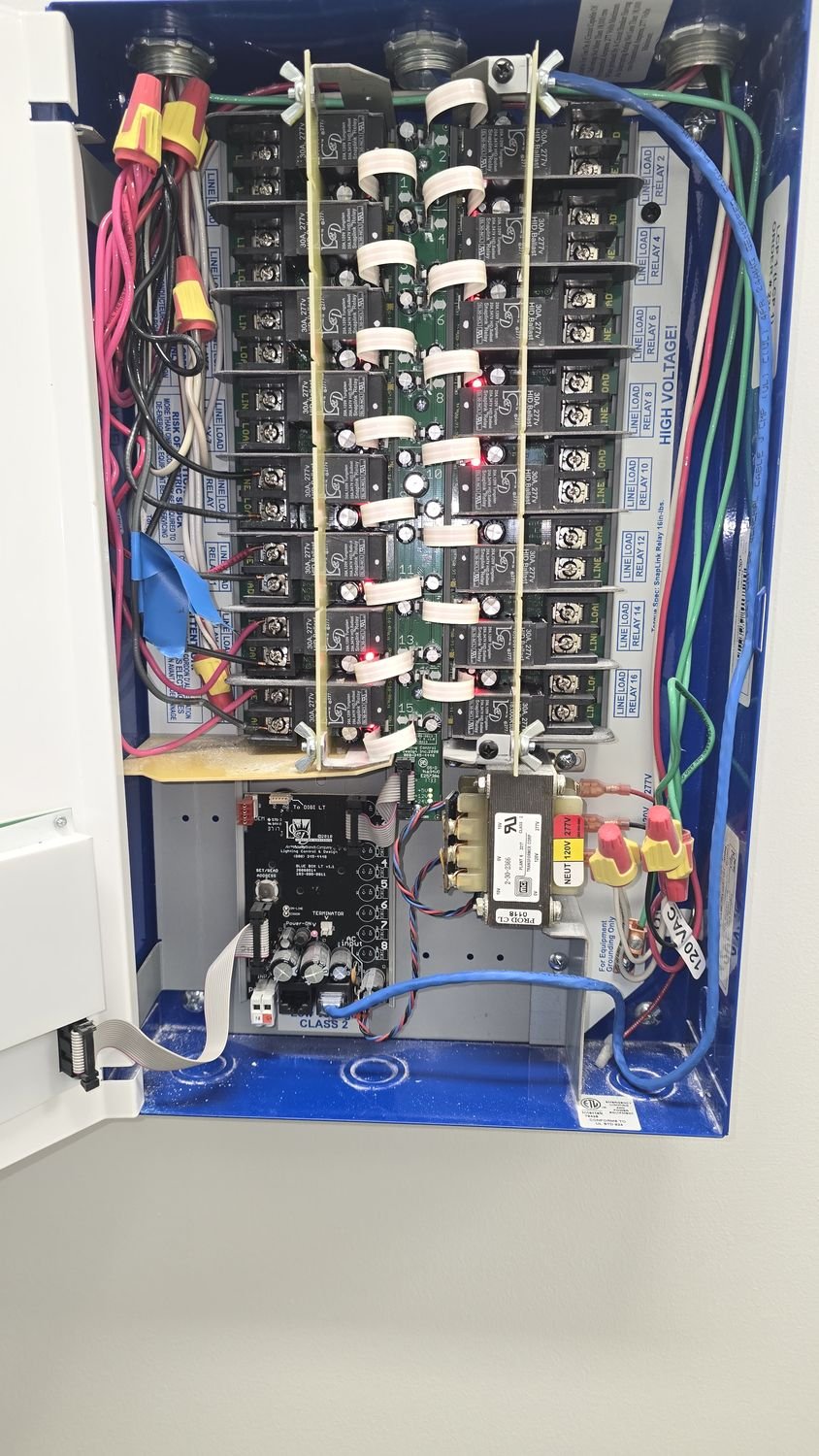
An ordinary breaker watches how much current a circuit draws. Too much for too long, it opens. That protects the wire from overheating along its length, and it has worked for a century.
It does not catch arcing. An arc is a small, unstable discharge across a gap — a loose terminal screw, a staple driven too hard through a cable, a cord pinched under a bed leg, a rodent-chewed conductor in an attic. An arc can burn at thousands of degrees at the point of contact while drawing so little current that the breaker sees nothing unusual. It will happily sit there igniting the framing around it while a perfectly functional breaker registers a normal load.
An AFCI breaker watches the shape of the current waveform, looking for the electrical signature of arcing, and opens when it finds it. That is why code has steadily expanded where they are required — bedrooms first, then living areas, and now most of a dwelling.
When yours keeps tripping
Work out whether it is one appliance or the circuit itself. Unplug everything on it, reset, and add devices back one at a time. If it holds with nothing plugged in and trips on a specific device, that device has a problem. If it trips with the circuit empty, the wiring does, and that is worth finding before it finds you.
The one thing not to do is replace an AFCI with a standard breaker to stop the nuisance. It is the same logic as removing a smoke alarm because it went off while you were cooking.