
Storms & water
Surge protection and the Alabama spring
One storm can take out every piece of electronics in a house. Two stages of protection is the standard we recommend, and here is what each one does.
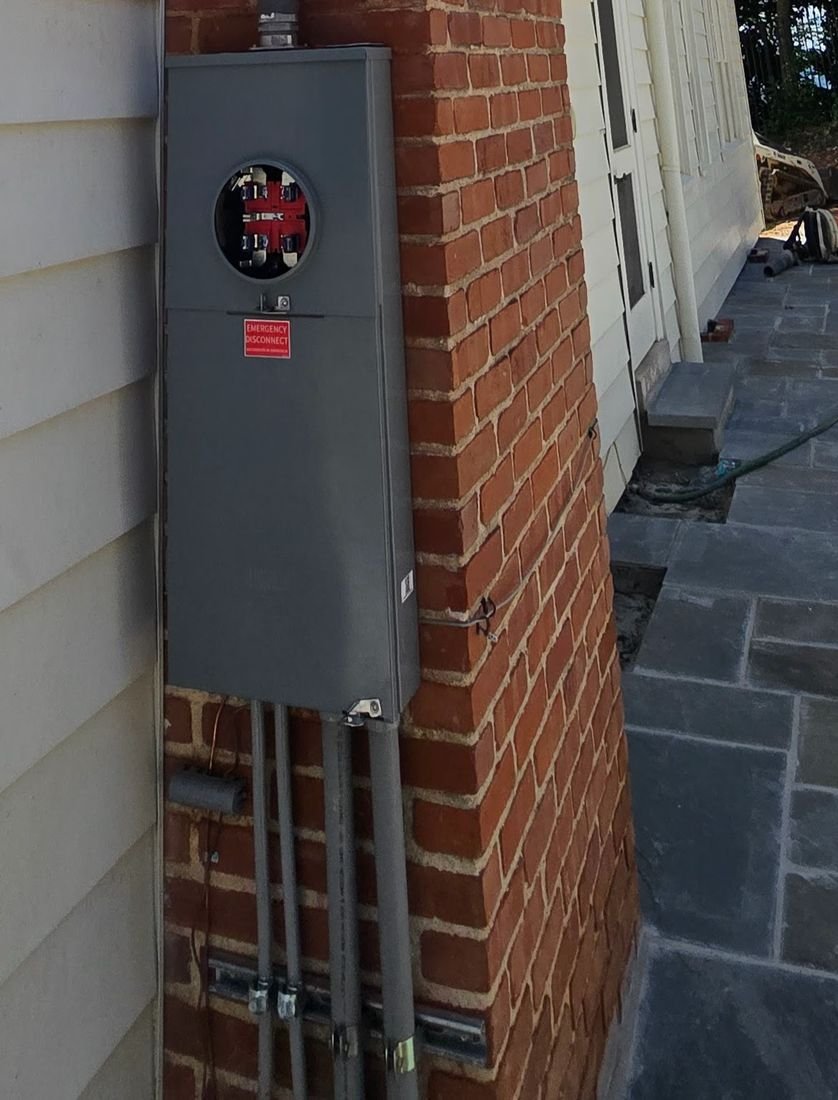
Central Alabama gets a genuinely severe storm season, and the damage we get called out for afterwards is rarely a direct strike. It is the surge that travels in on the service conductors, or the one induced on branch wiring by a strike a quarter mile away. A direct hit destroys obvious things. A surge kills the control board in the HVAC, the inverter in the range, the network rack, and the garage door opener, and the homeowner finds them one at a time over the following week.
Stage one: at the meter
A Type 1 device installed ahead of the main panel clamps the big stuff coming in from the utility. It handles the high-energy events — the ones that would otherwise walk straight through your panel and into everything downstream.
Stage two: at the panel
A Type 2 device at the load center catches what gets past stage one, and also the surges generated inside your own house. That is the part people miss: a well pump, an air conditioner compressor and a laser printer all put transients back onto your wiring every time they cycle.
We recommend two-stage protection on any home with a home theater, a network rack, a standby generator, or a modern HVAC system — which is to say most homes. Whole-home devices also need an intact grounding electrode system to shunt into, so a surge job on an older house usually starts with verifying the grounding and bonding. On a house with corroded ground rods, the surge protector is decoration.