Sparkswerks logo Sparkswerks (205) 319-1319

Licensed Alabama electrical contractor · Greater Birmingham | Lake Martin | Smith Lake

The Solution To Your Electrical Problem.

Sparkswerks repairs, upgrades and inspects the electrical systems in homes across Greater Birmingham. You choose how you are billed, flat rate or $185 an hour, with everything in writing before we start, permitted and inspected.

Open residential electrical panel with neatly terminated branch circuit wiring installed by Sparkswerks
Panel work, photographed and documented on every visit
$49
That is what it costs to get a truck to your door. Business hours, Monday to Friday, 7am–5pm. The dispatch fee covers the trip and the diagnostic visit, and it is credited toward any approved work over $249. For the work itself you choose: a flat-rate price, or $185 an hour. Either way it is in writing before we start.
Book a visit

What we do

Residential and light commercial electrical work.

From a single dead outlet to a full service upgrade. We pull permits and coordinate inspections and utility work so you do not have to.

Modern residential load center with labeled circuit breakers

Panels & service upgrades

Load centers, subpanels, meter bases, masts and full service upgrades — including replacing obsolete panels that cannot take modern breakers.

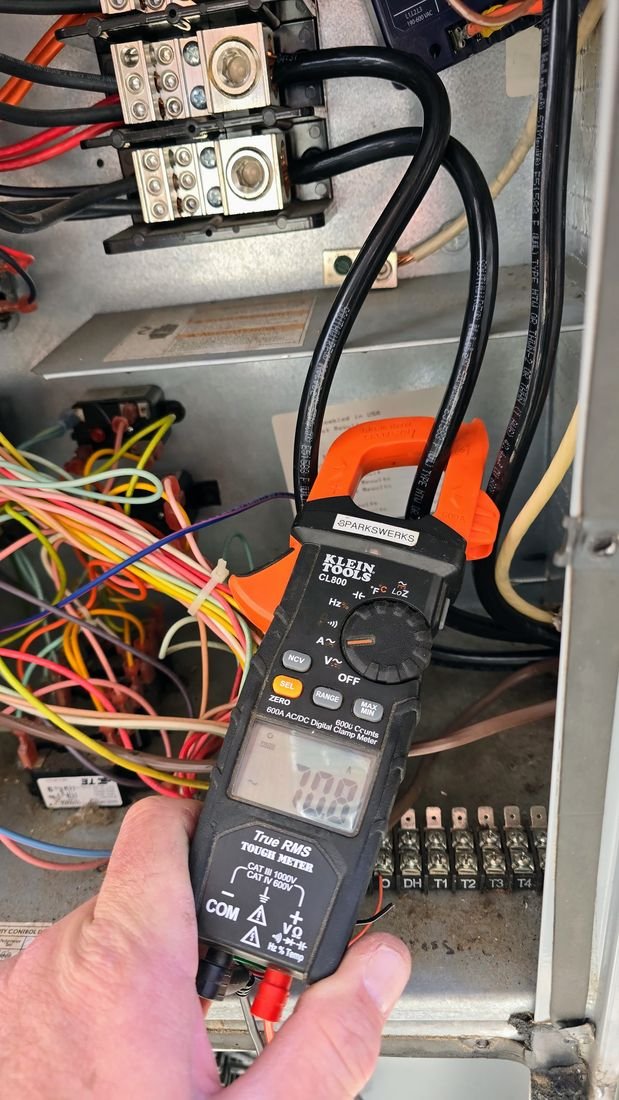
Sparkswerks technician using a clamp meter to troubleshoot an air handler circuit

Troubleshooting & repair

Dead circuits, breakers that will not hold, flickering lights, burning smells. We find the fault and fix the cause, not the symptom.

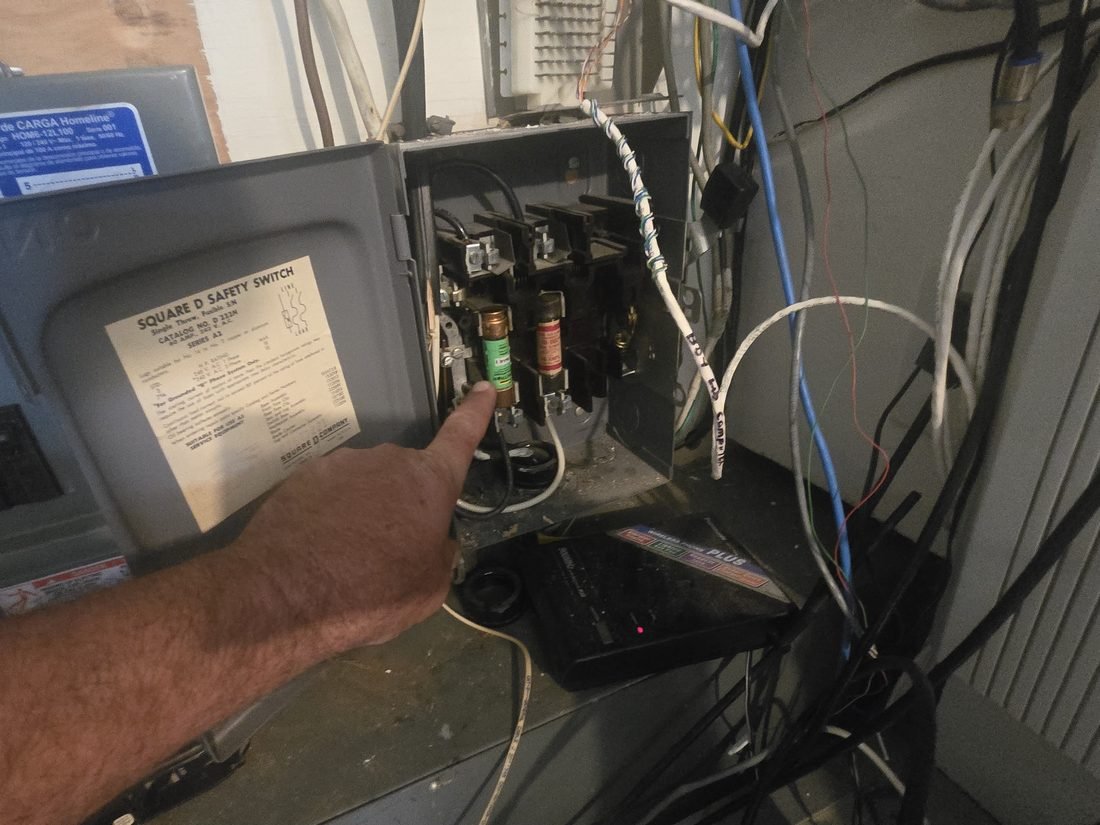
Technician pointing to a fuse inside a safety switch during an electrical inspection

Safety inspections

A documented whole-home inspection covering the panel, grounding and bonding, device condition, AFCI and GFCI coverage and smoke alarm placement.

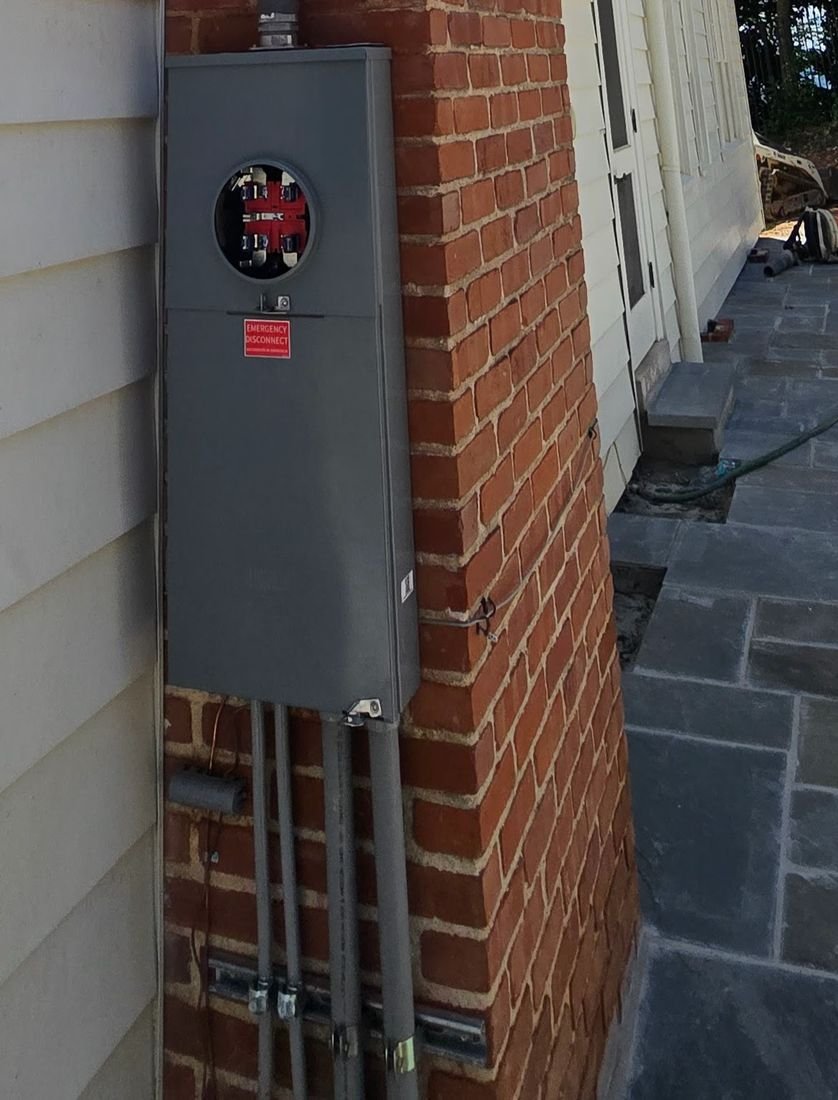
Exterior meter base and service disconnect mounted on a brick home

Surge & grounding

Whole-home surge protection at the meter and panel, grounding electrode systems, and bonding corrections on older houses.

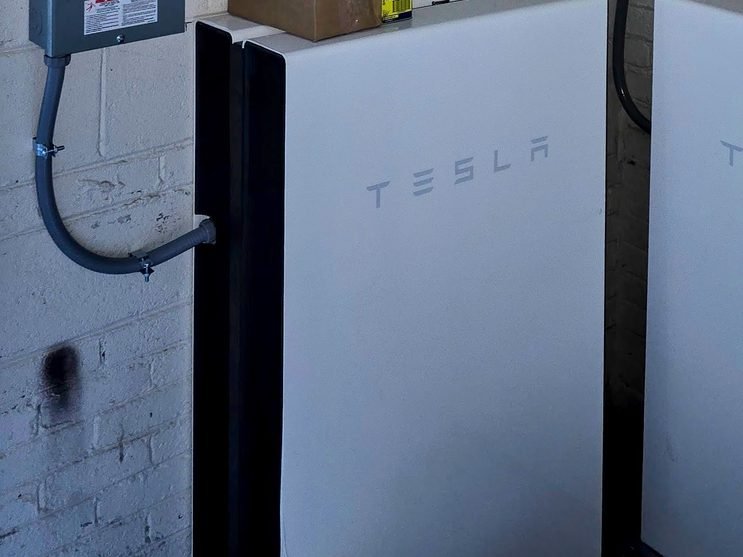
Tesla Powerwall battery storage system wired to subpanels in a basement

Backup power & EV

Transfer switches, generator interlocks, battery storage pre-wire, Level 2 EV chargers and the load calculation that has to come first.

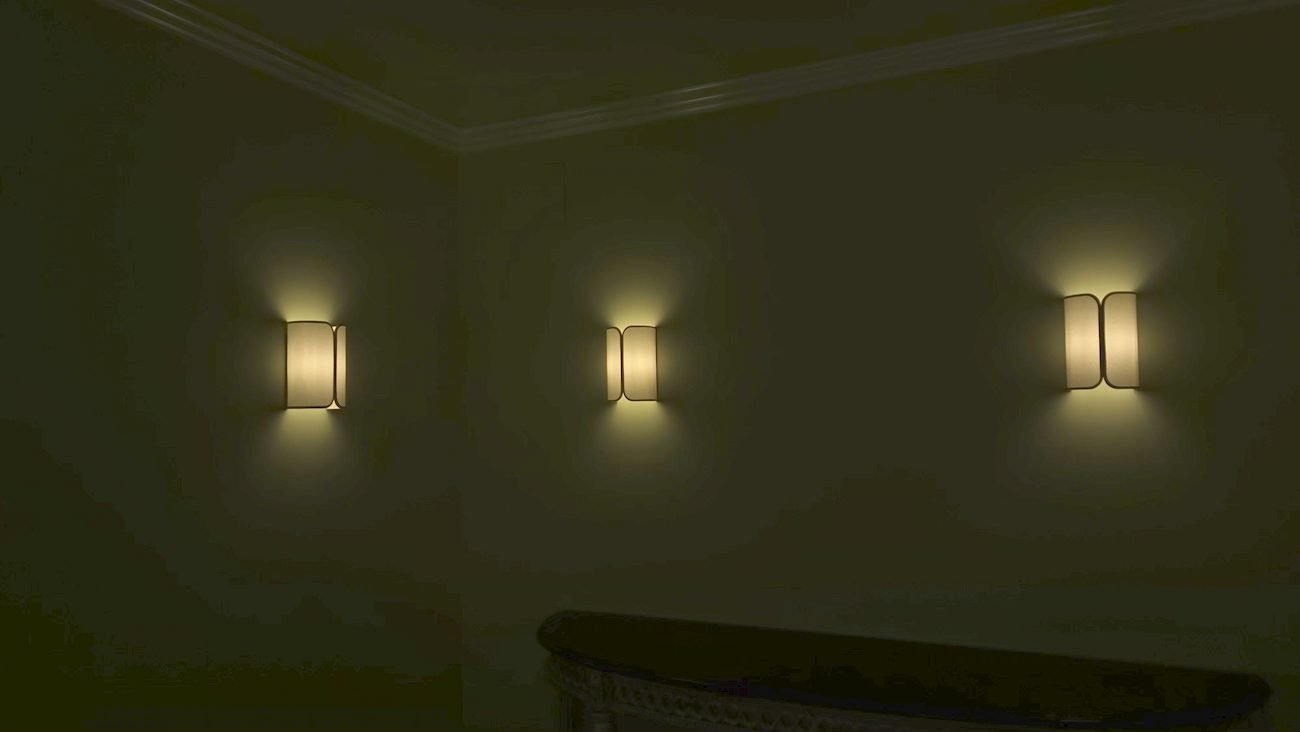
Exterior architectural wall sconces illuminated at night

Lighting & devices

Recessed, under-cabinet, accent and stair lighting, ceiling fans including Big Ass Fans installs, exterior and landscape lighting, receptacles, switches and smart controls.

Our specialty

Historic homes, rewired without losing what makes them historic.

Greater Birmingham is full of houses that were built before modern wiring existed, and plenty of electricians would rather not open them up. We specialize in them. An old house can be made safe for the way a family lives now without tearing out the plaster, trim and fixtures that are the reason it is worth owning.

What we usually find

  • Knob-and-tube wiring, often buried under attic insulation it was never meant to touch
  • Cloth- and rubber-insulated cable that has gone brittle with age
  • Two-prong outlets, with no ground anywhere in the house
  • Fuse boxes and 60-amp services feeding a house that now runs central air
  • Several generations of additions spliced into one another

How we handle it

  • New cable fished through existing wall and ceiling cavities, opening plaster only where there is no other way
  • Old knob-and-tube and cloth wiring removed or disconnected, and documented for your records and your insurer
  • Grounding and bonding brought up to current code
  • AFCI and GFCI protection added where it is now required
  • Period fixtures and trim left in place wherever they can safely stay
  • Permitted and inspected, with plaster repair coordinated with your finish contractor
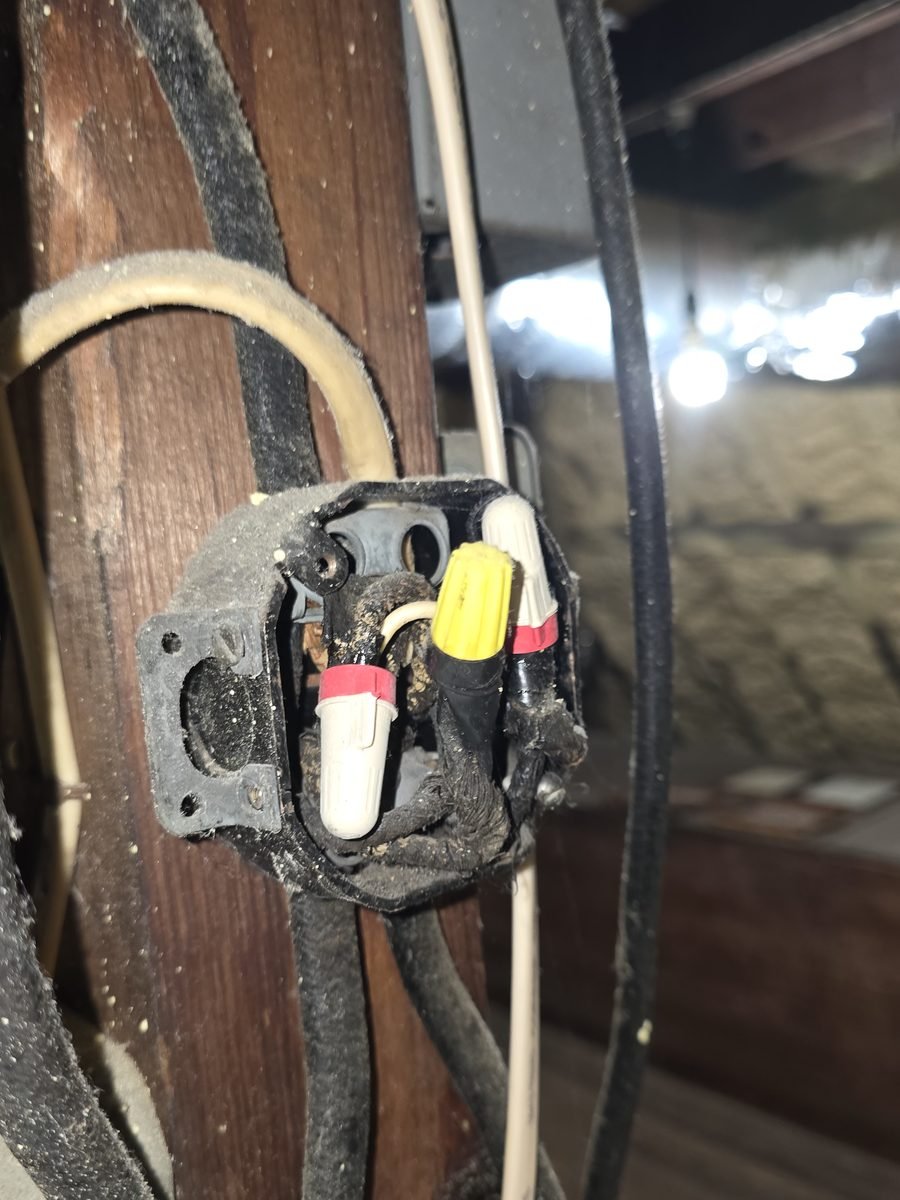
Old open junction box with cloth-covered cable mounted on a rough-sawn attic beam
An open junction box and cloth-covered cable on an attic beam. Out of sight for decades, and typical of what an older house is still running on.

Electrical safety

Electrical fires are a small share of house fires and a large share of the deaths.

These are national figures from the National Fire Protection Association, and state figures from the U.S. Fire Administration and the Alabama State Fire Marshal. We publish them because the gap between the two numbers is the whole argument for getting your system looked at.

46,652 Home structure fires a year in the U.S. involving an electrical failure, malfunction, or electrical distribution, lighting or power-transfer equipment
NFPA · annual avg 2020–2024
527 Lives lost each year in those fires, with 1,580 more injured
NFPA · annual avg 2020–2024
$2.4B Direct property damage every year — electrical equipment is the leading cause of home fire property loss
NFPA · annual avg 2020–2024
13 → 18% Electrical fires are about 13% of home fires but cause about 18% of home fire deaths
NFPA · annual avg 2020–2024
Why the death rate runs high: electrical fires start where you cannot see them — inside walls, above ceilings, in attics and in the panel itself. NFPA found home electrical fires most often begin in a kitchen or cooking area (15%), a bedroom (12%), or an attic or ceiling (9%). A fire that starts in a wall cavity at 2am has been burning for a while by the time a smoke alarm sounds.

Alabama is harder hit than the country as a whole

7.7 Deaths per 1,000 residential structure fires in Alabama
USFA / NFIRS · 2023
5.8 Deaths per 1,000 residential structure fires nationally, the same year
USFA / NFIRS · 2023
+33% How much more deadly a house fire in Alabama is than the national average
Calculated from the two figures above
83 Fire deaths statewide in 2024 — down 13.5% from the year before, and still among the worst rates in the country
Alabama State Fire Marshal · 2024 Annual Report

Sources: NFPA, Electrical Home Fire Safety · U.S. Fire Administration, Alabama fire loss profile · Alabama State Fire Marshal 2024 Annual Report. Figures are the most recent published at the time of writing. We update them when the agencies do.

Free, no signup

Home electrical safety check.

Twelve questions about things you can see and hear without opening anything. Tick every one that is true of your home. Nothing is sent anywhere — the result is calculated in your browser.

Tick what applies to your home

Be honest about the ones you are not sure of — leave those unticked and note them for a technician.

0
Nothing ticked yetWork down the list above and your result will appear here.

This checklist is general guidance, not a substitute for an inspection by a licensed electrician. It cannot see inside your walls. If anything on it worries you, stop reading and call someone.

Know what you are looking at

What a problem actually looks like.

These are photographs from our own jobs around Birmingham. None of them were emergencies when they were installed. All of them were on their way to becoming one.

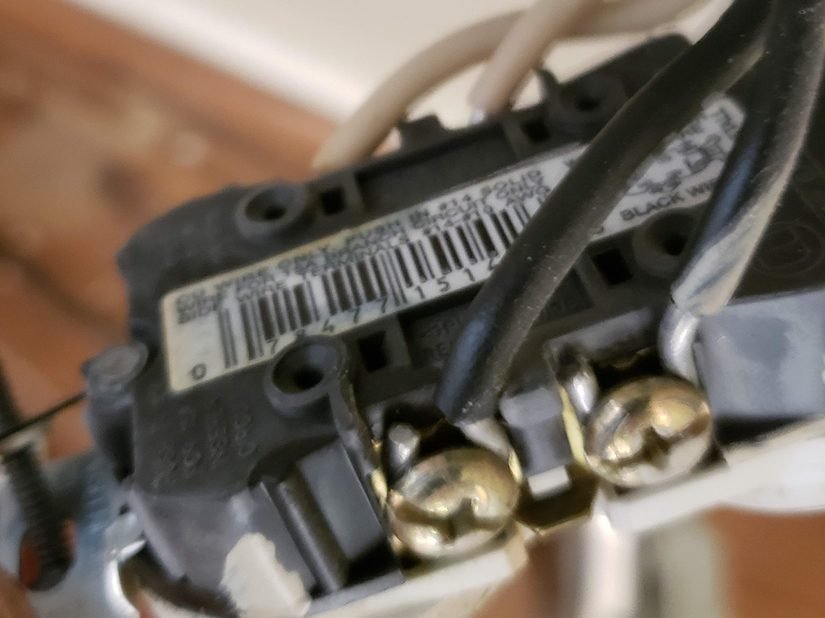
Receptacle pulled from a wall box showing damaged insulation and overheated terminal screws
An overheated connectionLoose terminations heat up every time the circuit is loaded. The damage creeps along the conductor, and none of it is visible with the cover plate on.
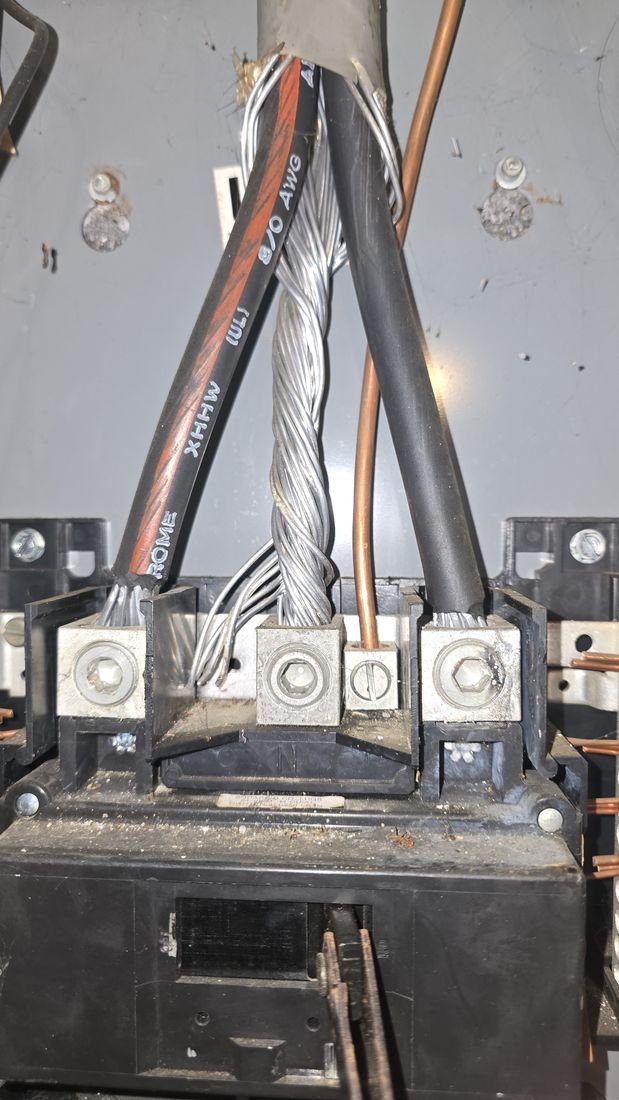
Panel lug burned by an arc during installation, with a neutral conductor only partly seated
Burned lug, half-landed neutralThis lug was burned by an arc during the original installation, and about 20 percent of the neutral’s stranded wire was never seated in it. This is the highest-current connection in the house, and we find problems like this in roughly one job in five, in new homes as well as old ones.
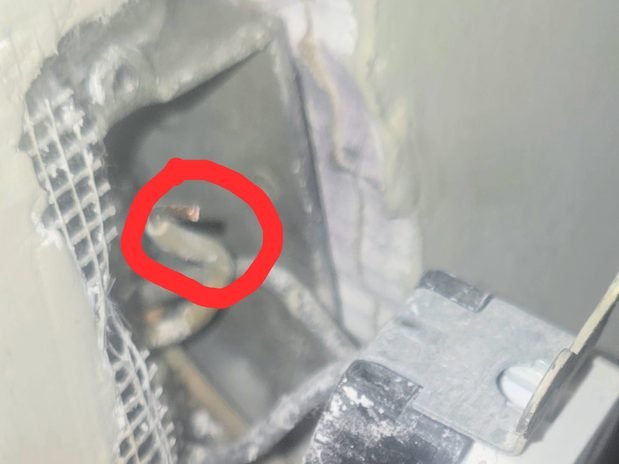
Electrical defect circled in red marker for the customer's documentation
Marked, photographed, reportedWe circle what we find and photograph it before we touch it, so you see the condition yourself rather than taking our word for it.

Eight signs worth a phone call

!
A breaker that keeps tripping

Resetting it over and over does not fix anything. The breaker is the one part of the system that is working.

!
Warm outlets or switch plates

No part of a healthy circuit should be warm to the touch. Warmth means resistance, and resistance means heat building somewhere.

!
A burning or fishy smell

Overheating plastic gives off a sharp, acrid smell. Some wire insulation smells faintly of fish as it cooks.

!
Buzzing, humming or crackling

Electricity should be silent. Noise usually means arcing, and arcing is how most electrical fires start.

!
Lights that dim or flicker on load

A dip when the AC kicks on can mean a loose neutral, a failing connection, or a service that is undersized for the house.

!
Discolored or sparking receptacles

Browning around the slots, or a spark bigger than a small blue flick when you plug something in.

!
Two-prong outlets throughout

Usually means an ungrounded system, and often means wiring old enough to be brittle.

!
A panel you cannot identify

If you do not know the brand or the age of your load center, that is worth ten minutes of somebody’s time.

If you smell burning right now: turn off the breaker for that area if you can reach the panel safely, unplug what you can, and get out if there is smoke. Call 911 for smoke or flame. Call us at (205) 319-1319 once everyone is safe.

Fire Shield by Sparkswerks

A maintenance membership for your home’s electrical system.

Most electrical fires start at connections nobody has looked at in years. Fire Shield puts a licensed electrician in your home on a schedule, documents what they find in writing, and moves you up the line when something does go wrong. Three levels, sized to the house.

Fire Shield Spark
One home, up to 2,500 sq. ft.
  • No dispatch fee on standard and after-hours visits
  • Annual whole-home electrical safety inspection
  • Front-of-the-line priority scheduling
  • Member pricing on all work
  • Lifetime warranty on our installations while your membership is active
  • Transferable to a buyer or to your next home
Fire Shield Blaze
Homes over 2,500 sq. ft.
  • Everything in Spark, plus:
  • Up to 5 surge protectors installed free with purchase of the units, where panel space allows
  • All panel connections torqued to factory specification every 4 years
  • Two-year warranty on all repairs
  • Written Home Electrical Health Report each year
Fire Shield Inferno
Premier whole-property coverage
  • Everything in Blaze, plus:
  • Every major appliance logged by make, model and serial number
  • Annual check of every appliance connection for tightness, heat and corrosion
  • Annual preventive-maintenance inspection of all major electrical equipment
  • Dock leakage test included on waterfront properties, with the waterfront trip charge waived
  • Your full appliance and equipment record delivered as a PDF each year

How it works. Your safety inspection comes round every eleven months and is documented in writing for your insurer and your own records. The membership transfers to a buyer at closing, or moves with you to your next home.

Our guarantees

In writing, on every job.

Five promises that come with the work, whether or not you are a member.

SERVICE & REPAIR

Fixed for a year, or we come back free

If you are not 100% satisfied with the service, we refund your money. If a repair fails within the first year, we return and repair it at no charge.

PANEL & MAIN SERVICE

Done on the date promised, or we credit you

Your replacement project is completed on the date we promise, or we credit you for every day we run over. Workmanship on panel replacements carries a multi-year warranty.

EQUIPMENT & FIXTURE

First-year failures are on us

If any equipment or fixture we supplied fails during normal use in the first year, we repair or replace it at no charge. Fire Shield Blaze and Inferno members carry this for the life of their membership.

CLEAN HOME

Cleaner than we found it, or we pay you

Floor protection, shoe covers and drop cloths on every visit. If we do not leave the space cleaner than we found it, we pay you.

FIXED PRICE

The approved price is the price

On flat-rate work, the price you approve is the price you pay. On hourly work, it is $185 an hour and nothing else. Either way, no change orders without your written approval.

QUESTIONS

Want the details first?

Call (205) 319-1319 and we will walk you through any of these, including the specific terms, before you book anything.

How-to

Things you can safely do yourself.

None of these require removing a panel cover or touching a wire. Each one ends with the point where you should stop and call a licensed electrician — we would rather you know where that line is than find it the hard way.

01Test a GFCI outlet — one minute, once a month
YOU NEED: a lamp or a phone charger. Nothing else.
  1. Plug in a lamp and switch it on, so you can see the power state at a glance.
  2. Press TEST. The RESET button should pop out with a click, and the lamp should go dark.
  3. Press RESET firmly. The lamp should come back on.
  4. Read the result. If nothing happened when you pressed TEST, or the lamp stayed lit, the device has failed.

A GFCI compares the current going out against the current coming back. When it sees a difference of a few thousandths of an amp — current leaking through a person, for instance — it opens in a fraction of a second. They are required in kitchens, bathrooms, garages, basements, outdoors and near any water. They also wear out, which is why the test matters.

Stop and call if: the GFCI will not reset, trips again on its own within minutes, or protects outlets you cannot account for. A GFCI that keeps tripping has usually found a real ground fault somewhere downstream.
02Reset a tripped breaker the right way
YOU NEED: a flashlight. Dry hands. Dry floor.
  1. Unplug what tripped it. Bring the circuit back with nothing loading it, so you learn something from what happens next.
  2. Push the handle fully to OFF first. A tripped breaker rests in a middle position. If you only shove it toward ON it will not re-engage, which is why people think a breaker is “dead” when it is not.
  3. Push firmly to ON. It should stay put.
  4. Plug things back in one at a time, giving each a minute. If one device trips it every time, the problem is the device, not the house.
Stop and call if: it trips again immediately with nothing plugged in, the panel is warm, you smell anything, the breaker feels loose or will not stay, or you find yourself resetting the same breaker weekly. Never replace a breaker with a larger one to stop the tripping — the breaker protects the wire in the wall, and that wire cannot carry more.
03Test your smoke alarms and know when to replace them
YOU NEED: a sturdy step stool or step ladder on a level floor, with someone steadying it. Never stand on a chair, a bed or other furniture. For high ceilings, press the test button from the floor with a broom handle, or use the remote test button if your alarms have one, rather than climbing. A helper in another room listens for the other alarms.
  1. Press and hold the test button until it sounds. It should be loud enough to be unpleasant.
  2. Check whether the others sound too. Interconnected alarms all go off together — that is what wakes people at the far end of the house.
  3. Find the date. Every alarm has a manufacture date printed on the back. Ten years from that date, it gets replaced, working or not. The sensor degrades.
  4. Count your coverage. One inside every bedroom, one outside each sleeping area, and at least one on every level including the basement.

Alabama’s residential fire death rate runs about a third above the national average. Working, interconnected alarms are the single cheapest thing that moves that number.

Call us if: your alarms are not interconnected, are battery-only in a house that could support hardwired, or chirp on a circuit that also does other things. We also install low-frequency sounders for hard-of-hearing residents, which wake people standard alarms do not.
04Identify your electrical panel — and find out if it is one of the bad ones
YOU NEED: a flashlight and a phone camera. Do not remove the cover.
  1. Find the panel. Usually a garage, basement, hallway, or outside next to the meter.
  2. Read the label on the door — brand name, and often an amperage. Photograph it.
  3. Look for these names: Federal Pacific or FPE, Stab-Lok, Zinsco, GTE-Sylvania, or Challenger.
  4. Photograph the main breaker rating — the big one at the top. 60, 100, 150 or 200 amps.

Federal Pacific Stab-Lok, Zinsco and Challenger panels have a documented history of breakers that fail to trip under overload. A breaker that does not trip is not a minor defect; it is the removal of the only protection the circuit has. Modern AFCI and GFCI breakers are not made for these panels, so there is no way to bring one up to current protection standards. We quote them as a replacement rather than adding breakers to them.

Never remove the panel cover. The service conductors feeding the main lugs stay energized even with the main breaker off. There is no homeowner task inside a panel.
05Map your circuit directory in an afternoon
YOU NEED: a helper, a phone, and a lamp or a plug-in radio.
  1. Number every breaker top to bottom on a sheet of paper before you switch anything.
  2. Turn one breaker off. Walk the house with your helper and note every outlet, light and appliance that went dead.
  3. Write it on the sheet, then turn that breaker back on and move to the next.
  4. Type it up and tape it inside the door. A legible directory is worth real money during an emergency, and it is required on new panel work.

Do this once and you will know which breaker kills the kitchen before you need to know it at midnight with water coming through a ceiling. Reset any clocks afterwards, and be careful cutting power to anything with a computer in it.

Note anything odd: a breaker that kills rooms on opposite ends of the house, one that controls nothing you can find, or outlets that stay live with everything off. Those are worth a call.
06What to do when you smell burning
  1. Find out whether there is smoke. If there is visible smoke or flame, get everyone out and call 911. Nothing below matters more than that.
  2. Kill power to the area if you can reach the panel safely and know which breaker it is. If you do not know, switch off the main.
  3. Leave it off and call an electrician. A burning smell that stops is not a problem that stopped.
The smell fading is not the all-clear. Overheated insulation smells strongest while it is cooking and quiets down afterwards, and the damaged connection is still there, still carrying current, still heating up every time the circuit loads.

From the field

What we keep running into around Birmingham.

Written by the people doing the work, about the things that actually come up on Alabama jobs. Open any one to read it.

Historic homes

Rewiring a historic Birmingham home without gutting it

An old house can be made electrically safe without tearing out the plaster that makes it worth owning. Here is what is usually behind the walls, and how the work gets done.

Read the post →

By the Sparkswerks team · Published September 2026

Forest Park, Highland Park, Norwood, Redmont. Edgewood and Hollywood in Homewood. The older streets of Mountain Brook. A great many of the houses people most want to own around Birmingham were built in the first decades of the 1900s, when a home’s electrical system was expected to run a handful of lamps and perhaps an iron. The same wiring is now being asked to carry air conditioning, a kitchen full of appliances and a car charger.

What is usually behind the plaster

  • Knob-and-tube. Individual conductors run through the framing on porcelain knobs and tubes. It has no ground, and it was designed to shed heat into open air — which is why attic insulation piled on top of it is a real problem, not a technicality.
  • Cloth- and rubber-insulated cable. Common from the 1930s into the 1950s. The insulation dries out and crumbles when it is disturbed, so it often looks fine until somebody changes a light fixture.
  • Ungrounded two-prong outlets. Usually the visible sign of one of the two above.
  • Fuse boxes and 60-amp services. Sized for a house with no air conditioning. The classic hazard is a fuse larger than the wire it protects, put in to stop it blowing.
The original wiring is rarely the first thing to fail. It is usually the fifth modification somebody made to it.

Why it comes up when you buy or insure

Some insurers will not write or renew a policy on a house with active knob-and-tube wiring or a fuse panel, and others ask for an electrician’s report first. If you are buying a historic home, find out what is in the walls before closing rather than after. A documented inspection is the cheapest part of the whole purchase.

How a rewire is done without gutting the house

The house is surveyed first: every circuit traced, every outlet and fixture accounted for, and the old wiring located. New cable is then fished through the cavities that already exist — up from the basement or crawlspace, down from the attic, through closets and behind baseboards. Plaster is opened only where there is no other route, in small access holes rather than long channels, and the patching is coordinated with your finish contractor.

The old wiring is disconnected and removed where it can be reached, abandoned safely where it cannot, and documented either way, so the next inspector, insurer or buyer can see what was done. If the service and panel are undersized they are replaced as part of the same job, with the grounding and bonding brought up to current code.

What gets to stay

Original light fixtures can usually be rewired and rehung. Push-button switches are made new to current standards, so the look survives even where the hundred-year-old device cannot. Trim, plaster medallions and switch plates stay where they are.

If a full rewire is not in the budget yet

  • Have it inspected, so you know which circuits are original and which are not
  • Never insulate over knob-and-tube, and keep heavy loads such as space heaters and window units off those circuits
  • AFCI protection can be added to catch the arcing faults old wiring is prone to
  • Code allows a GFCI to replace an ungrounded outlet when it is labeled “No Equipment Ground” — it does not create a ground, but it does protect people

One more thing worth knowing: if your home is in a designated historic district, exterior changes such as moving a meter or a service mast to a street-facing wall may need design review. Ask before the work is planned, not after.
Safety · Alabama

A house fire in Alabama is about a third more likely to result in loss of life

The national numbers on electrical fires are bad enough. The Alabama numbers are worse, and the reason is not what most people assume.

Read the post →

By the Sparkswerks team · Published September 2026

In 2023, residential structure fires in Alabama resulted in 7.7 deaths for every 1,000 fires. The national figure that year was 5.8. That is roughly a third more deaths from the same number of fires, and it has been a pattern for years rather than a one-year spike — Alabama has historically sat near the top of the national fire death tables.

The instinctive explanation is that Alabama has more fires. That is not really it. The gap is in what happens after ignition: how long a fire burns before anyone knows, how far people have to go to get out, and how quickly a department can get there. Rural response distances, older housing stock, a higher share of homes without working interconnected smoke alarms, and heating practices in cold snaps all push the same direction.

Electrical fires make this worse specifically because of where they start. NFPA data puts 9% of home electrical fires in an attic or ceiling. A fire in a ceiling cavity is invisible, quiet, and well established before a single alarm sounds.

What actually moves the number is unglamorous. Interconnected smoke alarms in every bedroom, so the whole house wakes up rather than one room. Alarms younger than ten years, because the sensors degrade whether or not the test button still beeps. AFCI protection on bedroom circuits, which is designed to catch exactly the arcing faults that start fires in concealed wiring. And getting a look at the connections that have been quietly heating up for twenty years.

None of that is dramatic, and none of it is expensive next to the alternative.

Panels & wiring

Federal Pacific, Zinsco and Challenger: the three panels we will not add breakers to

Why we quote these as a replacement instead of doing the cheap thing you asked for.

Read the post →

By the Sparkswerks team · Published September 2026

Somebody calls because they want two more circuits for a finished basement. We open the panel, and it is a Federal Pacific Stab-Lok. Now we are having a different conversation than the one they wanted, and it is worth explaining why.

A circuit breaker has one job. When current exceeds what the wire in the wall can carry, it opens. Everything else about your electrical system assumes that this happens. Federal Pacific Stab-Lok breakers, along with Zinsco and Challenger, have a long-documented record of failing to trip under overload — sometimes jamming in the on position entirely. A breaker that does not trip is not a degraded component. It is the removal of the only thing standing between an overloaded conductor and the framing around it.

The second problem is that there is no upgrade path. Modern AFCI and GFCI breakers — the ones code now requires across most of a house — are not manufactured for these panels. Even the replacement standard breakers you can find are usually old stock or third-party units of uncertain provenance. There is no way to bring one of these panels to current protection standards while it stays on the wall.

These panels were installed in enormous numbers between the 1950s and the early 1980s. Plenty of them are in Birmingham-area homes right now, behind a door nobody has opened in a decade.

What we do instead is quote the panel as a replacement, with the grounding electrode system verified, code-required AFCI and GFCI protection, a typed circuit directory, and the permit and inspection handled. You get the two basement circuits as well. It costs more than adding two breakers. It is also the only version of the job that is honest.

If you want to know what you have: the panel door has a brand label, and you can photograph it without removing anything. Do not take the cover off — the conductors feeding the main lugs stay live with the main breaker off.

Storms & water

Surge protection and the Alabama spring

One storm can take out every piece of electronics in a house. Two stages of protection is the standard we recommend, and here is what each one does.

Read the post →

By the Sparkswerks team · Published September 2026

Central Alabama gets a genuinely severe storm season, and the damage we get called out for afterwards is rarely a direct strike. It is the surge that travels in on the service conductors, or the one induced on branch wiring by a strike a quarter mile away. A direct hit destroys obvious things. A surge kills the control board in the HVAC, the inverter in the range, the network rack, and the garage door opener, and the homeowner finds them one at a time over the following week.

Stage one: at the meter

A Type 1 device installed ahead of the main panel clamps the big stuff coming in from the utility. It handles the high-energy events — the ones that would otherwise walk straight through your panel and into everything downstream.

Stage two: at the panel

A Type 2 device at the load center catches what gets past stage one, and also the surges generated inside your own house. That is the part people miss: a well pump, an air conditioner compressor and a laser printer all put transients back onto your wiring every time they cycle.

A plug-in power strip is not a third stage of anything. It protects what is plugged into it, from what reaches that outlet, and nothing else in the house.

We recommend two-stage protection on any home with a home theater, a network rack, a standby generator, or a modern HVAC system — which is to say most homes. Whole-home devices also need an intact grounding electrode system to shunt into, so a surge job on an older house usually starts with verifying the grounding and bonding. On a house with corroded ground rods, the surge protector is decoration.

Storms & water · Lake safety

Electric shock drowning: the lake hazard you cannot see from the dock

Fresh water conducts badly enough that a small AC leak turns the water around a dock into something a swimmer cannot get out of.

Read the post →

By the Sparkswerks team · Published September 2026

Electric shock drowning happens when AC current leaks from dock wiring, a boat lift, or a boat’s shore power connection into the surrounding water. Fresh water is a poor conductor compared to the human body, so current preferentially travels through a swimmer. It does not take much. Well below the level that would be fatal on land, current through the chest causes muscle paralysis, and a person who cannot move cannot swim. They go under. From the dock it looks like an ordinary drowning, and people who jump in to help become the second casualty.

There is no visible sign. The water looks the same. This is the entire problem — the only way to know is to test for leakage current.

It matters here because Smith Lake and Lake Martin are full of private docks with electrical service, many of them installed decades ago and extended informally since, and fresh water is where the hazard exists. Saltwater marinas have a different risk profile entirely.

What we look for

  • Leakage current on every circuit feeding the dock, measured rather than assumed
  • GFCI protection on every dock and boathouse circuit, tested under load
  • Equipment grounding conductor continuity from the dock back to the service
  • Bonding of the lift frame, ladders and any metal a swimmer could reach
  • Condition of the feeder — direct-buried cable, splices and terminations that have been in weather for years

The practical homeowner rule, separate from any of this: nobody swims within 100 feet of a dock with power on it. Cutting the shore power breaker before anyone gets in the water costs nothing and removes the hazard entirely.

Code & equipment

What an AFCI breaker actually does

They are the breakers people complain about. They are also the ones aimed directly at the fires that take lives.

Read the post →

By the Sparkswerks team · Published September 2026

An ordinary breaker watches how much current a circuit draws. Too much for too long, it opens. That protects the wire from overheating along its length, and it has worked for a century.

It does not catch arcing. An arc is a small, unstable discharge across a gap — a loose terminal screw, a staple driven too hard through a cable, a cord pinched under a bed leg, a rodent-chewed conductor in an attic. An arc can burn at thousands of degrees at the point of contact while drawing so little current that the breaker sees nothing unusual. It will happily sit there igniting the framing around it while a perfectly functional breaker registers a normal load.

An AFCI breaker watches the shape of the current waveform, looking for the electrical signature of arcing, and opens when it finds it. That is why code has steadily expanded where they are required — bedrooms first, then living areas, and now most of a dwelling.

They get a bad reputation because early generations nuisance-tripped on vacuum cleaners and treadmills. Current devices are markedly better, and a modern AFCI that trips repeatedly is usually finding something real.

When yours keeps tripping

Work out whether it is one appliance or the circuit itself. Unplug everything on it, reset, and add devices back one at a time. If it holds with nothing plugged in and trips on a specific device, that device has a problem. If it trips with the circuit empty, the wiring does, and that is worth finding before it finds you.

The one thing not to do is replace an AFCI with a standard breaker to stop the nuisance. It is the same logic as removing a smoke alarm because it went off while you were cooking.

Panels & wiring

Aluminum branch wiring in 1960s and 70s Birmingham homes

If your house went up between about 1965 and 1975, there is a real chance the branch circuits are aluminum. Here is what that means and what it does not.

Read the post →

By the Sparkswerks team · Published September 2026

Copper prices spiked in the mid-1960s, and for roughly a decade a great deal of residential branch wiring was run in aluminum instead. A lot of it is in houses around Birmingham, Irondale and the surrounding communities, and most of the owners have no idea.

Aluminum itself is not the problem — service entrance conductors and feeders are routinely aluminum today and perform fine. The problem is aluminum at the terminations on small branch circuits. Aluminum expands and contracts more than copper as the circuit heats and cools, so terminal screws gradually loosen. It also oxidizes, and aluminum oxide is a poor conductor, so the connection gets more resistive, which makes it hotter, which loosens it further. The failure mode is a slow loop, and left alone it ends the way overheated connections end: with charred insulation, a melted device and, in the worst cases, a fire inside the wall. Aluminum branch wiring is a documented fire hazard for exactly this reason, and it is why we treat it as a safety item rather than a cosmetic one.

The tell is a single-strand solid conductor with a dull silver finish, and often “AL” or “ALUMINUM” printed on the cable jacket. Homeowners usually discover it when they swap a receptacle. An inspector usually spots it first in the panel, where the silver conductors land on the breakers and the neutral bar.

How many houses around Birmingham are in the window

Nobody keeps a count of aluminum-wired houses by city. What the Census Bureau does count is when houses were built, and the aluminum years, roughly 1965 to the mid-1970s, sit across the 1960s and 1970s. Here is how many housing units in each city date from those two decades, from the 2024 American Community Survey:

  • Birmingham: about 31,600 built 1960–1979, or 29% of all housing in the city
  • Vestavia Hills: about 5,200, or 35%
  • Homewood: about 3,200, or 29%
  • Mountain Brook: about 3,100, or 35%
  • Irondale: about 3,000, or 45%
  • Jefferson County as a whole: about 94,900, or 31%

Roughly half of those went up inside the aluminum years themselves. Not every house from that period got aluminum branch circuits; it came down to the builder, the supplier and the price of copper that month, so there is no honest way to turn these counts into a number of aluminum-wired houses. Nationally, the Consumer Product Safety Commission put it at 1.5 to 2 million homes, and its research found that homes built before 1972 and wired with aluminum are 55 times more likely to have a connection at an outlet reach fire-hazard conditions than homes wired with copper. Around here that means tens of thousands of houses are the right age to have it, and the only way to know about yours is to look.

Sources: U.S. Census Bureau, American Community Survey 2024 five-year estimates, table B25034, year structure built · CPSC Publication 516, Repairing Aluminum Wiring, 2011 · CPSC testimony on residential aluminum wiring, June 1978.

What is worth doing

If the house can reasonably be rewired, that is the option we prefer: new copper branch circuits, and the aluminum removed or disconnected and documented. Where it is reasonable depends on access. A house with an open attic and an accessible crawlspace can often be rewired without opening much plaster. One built on a slab, with finished ceilings and no way into the walls, usually cannot be, at least not at a price that makes sense.

When most of the house is not easily accessible, the accepted repair is correcting every termination instead — either devices rated CO/ALR, or pigtailing to copper at each box with connectors specifically listed for aluminum-to-copper — and adding protection on top of it: combination arc-fault (AFCI) breakers, which are built to catch the arcing a loosening aluminum connection produces before it becomes a fire, and ground-fault (GFCI) protection where the code calls for it. Standard wire nuts are not that, and twisting aluminum to copper under an ordinary wire nut is the most common do-it-yourself mistake we see on these houses; it creates the same loose, overheating joint the repair is meant to remove. It is tedious rather than difficult, and it is priced per device because that is genuinely what the labor is.

What is not acceptable is a standard receptacle on aluminum wire, which is what we find most of the time, usually installed by a previous owner who had no idea there was a distinction. If your house is from that era, this is worth checking before you sell, because a home inspector will find it.

Quick answers

Questions we get asked most.

How much does it cost to have you come out?
$49 during business hours, Monday to Friday, 7am–5pm. That covers the trip and the diagnostic visit, and it is credited toward any approved work over $249. For the work itself you choose flat rate or $185 an hour, and the next question explains which to pick. Both are put in writing before work begins. After-hours and emergency dispatch are priced differently — ask when you call.
Flat rate or hourly: which should I choose?
Usually hourly, and here is why. A flat-rate price puts all the risk on us, so every contractor, us included, quotes the worst case. If we quote $5,000 flat and the job runs to $6,000, you pay $5,000 and we take the loss. If the same job is billed at $185 an hour and we finish at $4,000, you pay $4,000: our electricians and office are paid fairly, and you keep the difference. In our experience hourly comes out better for the homeowner more than nine times in ten. Flat rate caps your cost, but you pay for that cap. Hourly protects us from overruns, and you usually save. Our advice: choose hourly with a contractor you trust, and ask for flat rate from one you do not know yet.
What areas do you serve?
We are based in Irondale and serve Greater Birmingham, Lake Martin and Smith Lake, including waterfront and dock electrical work at both lakes. If you are not sure whether you are in range, call and ask.
Are you licensed and insured?
Yes. Sparkswerks is a licensed Alabama electrical contractor and carries full insurance. We pull permits and coordinate inspections in the counties we serve. Our Alabama electrical contractor license number is 07831, and we are happy to provide license and insurance documentation before work begins.
Do you give quotes over the phone?
For straightforward, well-described work, often yes. For anything involving a panel, a fault to be located, or conditions behind a wall, we need eyes on it — the honest answer depends on what we find at the panel. That is what the dispatch visit is for, and it is credited toward the work.
My breaker keeps tripping. Can I just put in a bigger one?
No, and this is the single most dangerous shortcut in home electrical work. The breaker is sized to protect the wire inside your wall, not the appliance. A larger breaker lets that wire carry more current than it was made for, and the wire is the part you cannot see overheating. Repeated tripping means the circuit is reporting a real fault — overload, a short, or an arcing connection — and it needs diagnosing.
How do I know if my panel is one of the unsafe ones?
Look at the label on the panel door, without removing the cover. Federal Pacific, FPE, Stab-Lok, Zinsco, GTE-Sylvania and Challenger all have documented histories of breakers failing to trip on overload. They cannot be retrofitted with modern AFCI or GFCI breakers, so we quote them as a replacement rather than adding to them. Photograph the label and send it to us if you are not sure.
Do you work on generators?
We cover the electrical scope — transfer switches, interlocks, feeders, bonding, permit and inspection. The generator equipment itself, the gas piping and the concrete pad come from you or your generator dealer. We do not service or load-bank generators.
What are the warning signs of an electrical fire hazard?
Breakers that trip repeatedly, outlets or switch plates that feel warm, a burning-plastic smell with no obvious source, lights that dim when an appliance starts, buzzing from a panel or switch, and scorch marks around a receptacle. A burning smell or a warm panel is urgent: switch off the circuit if you can do it safely and call a licensed electrician.
How often should I test a GFCI outlet?
Once a month. Press TEST — the RESET button should pop out and power to the outlet should cut off. Press RESET to restore it. If pressing TEST does nothing, or the outlet still has power afterwards, the GFCI has failed and needs replacing.
Why do electrical fires cause more deaths than their share of house fires?
NFPA figures for 2020–2024 show home electrical fires are about 13% of home structure fires but about 18% of home fire deaths. They often start inside walls, attics and ceilings where nobody can see them, and often at night, so they burn longer before anyone notices.
Can you rewire an old house without tearing out the plaster?
In most cases, yes — historic homes are our specialty. New cable is fished through existing wall and ceiling cavities from the attic, basement or crawlspace, and plaster is opened only where there is no other route. Old knob-and-tube and cloth-insulated wiring is removed or disconnected and documented for your insurer.
What is Fire Shield?
Fire Shield is our home electrical maintenance membership. Members get a documented whole-home safety inspection every eleven months, priority scheduling, member pricing on all work, no dispatch fee on standard and after-hours visits, and a lifetime warranty on our installations for as long as the membership is active. There are three levels — Spark, Blaze and Inferno — sized to the home. Call for current membership rates.
Can you work on commercial buildings?
Yes. Alongside residential work we handle light commercial — service equipment, distribution, controls, lighting and troubleshooting. Call and describe the scope.

Service area

Based in Irondale, serving Greater Birmingham, Lake Martin and Smith Lake.

If you are not sure whether you are in range, call and ask. We would rather tell you straight than have you wonder.

Greater BirminghamLake MartinSmith Lake
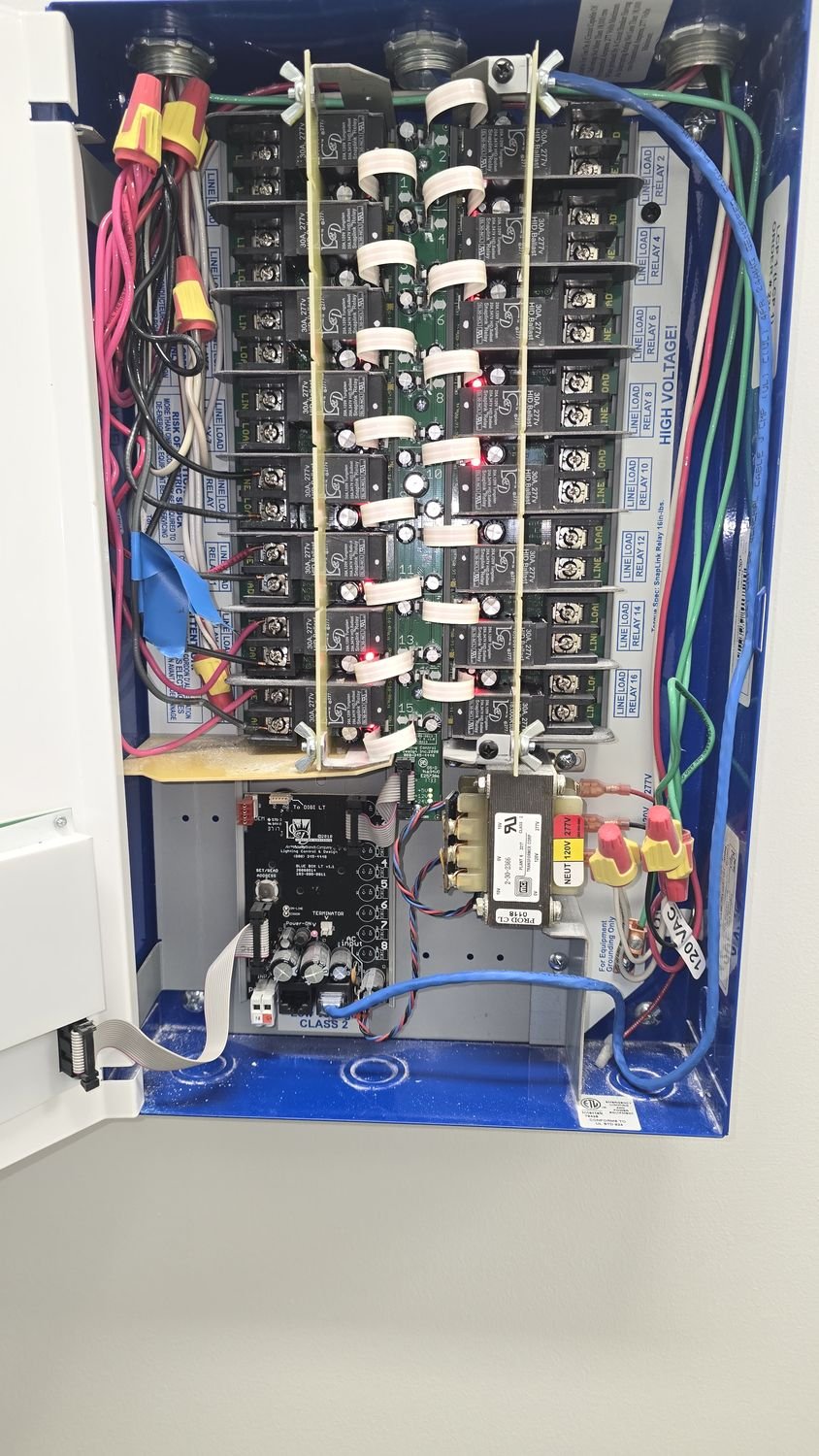
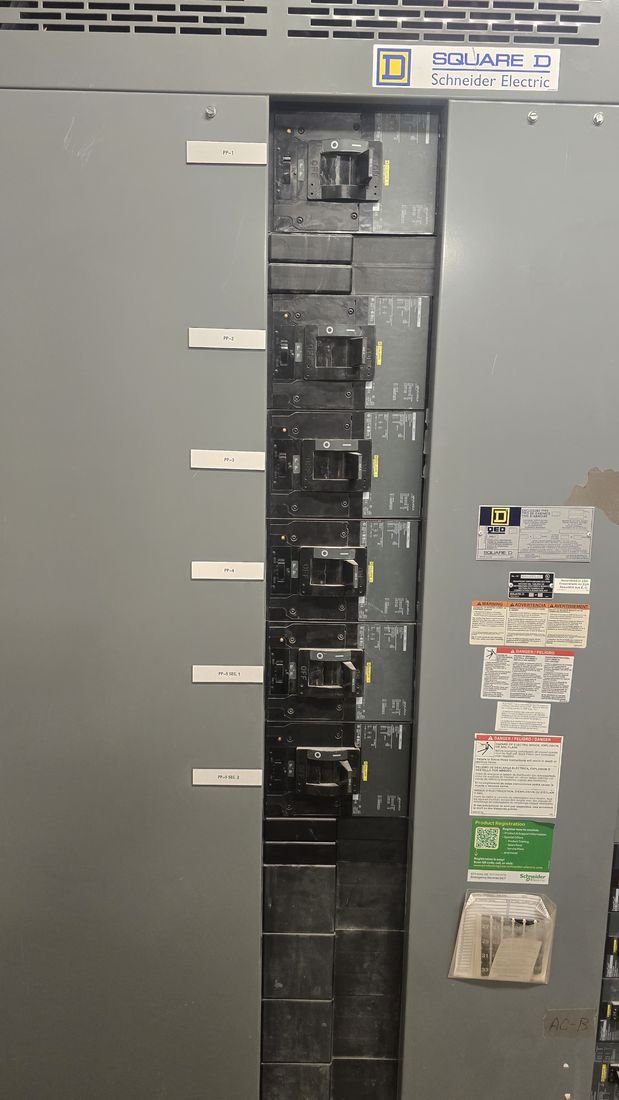
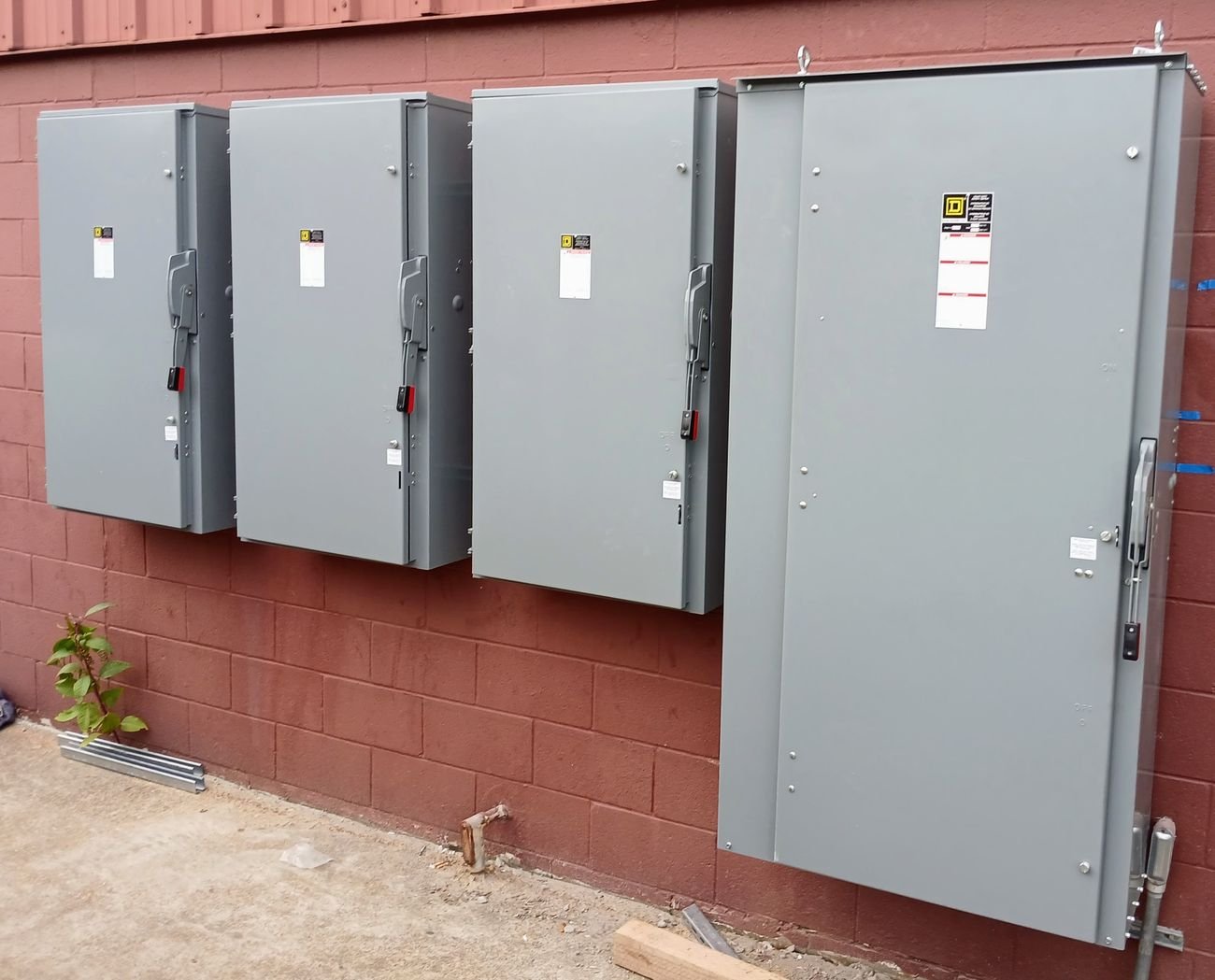
Row of exterior electrical disconnects installed on a brick commercial building
Commercial serviceWe install, repair, replace and rebuild electrical panels and services.
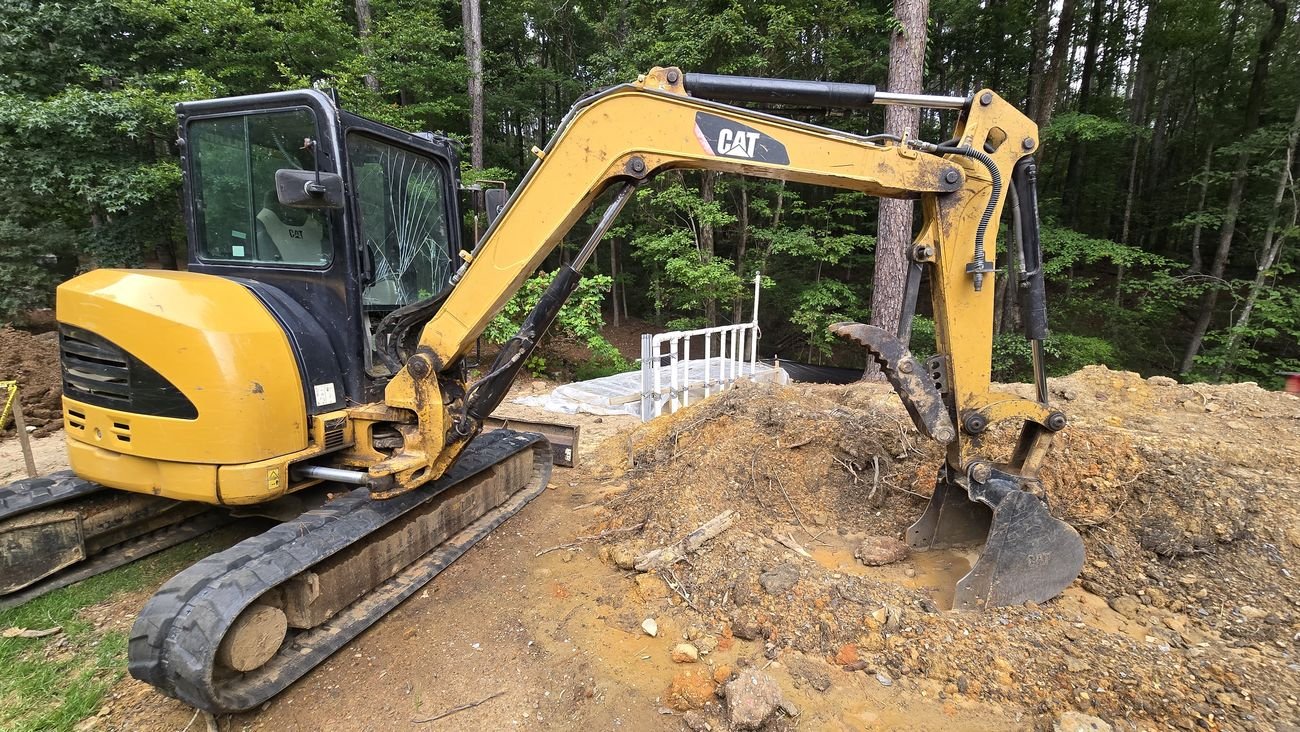
Mini excavator trenching for an underground electrical feeder
Underground feedersDetached shops, garages, gates, docks, pools and spas, trenched and inspected.
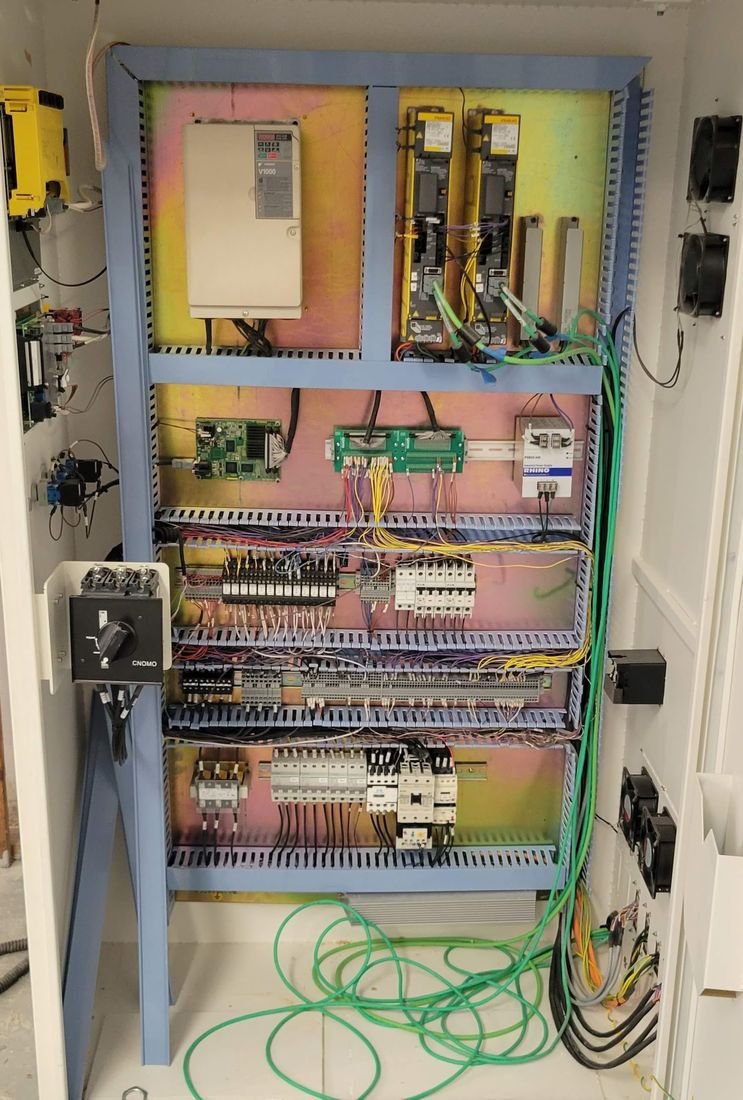
Control panel with color-coded wiring and terminal blocks
Controls and low voltagePanels, terminations and documentation you can hand to the next person.

Get in touch

No answering service. Real people, out fixing your neighbors’ houses.

If we don’t pick up, we’re on a job. Leave a message and we’ll call you back as soon as possible. Tell us what’s happening and roughly when it started — and if it’s an emergency, say so first.

Send us a message

Tell us what is going on and we will get back to you. The more you can say about what it is doing and when it started, the better prepared we arrive.

Emergency? Do not use this form — sparks, smoke, a burning smell or a hot panel need a phone call. (205) 319-1319
How soon do you need us?

We use what you send here to answer you, and nothing else. Prefer to talk? Call (205) 319-1319, Monday to Friday, 7am–5pm.

Reach us

Phone(205) 319-1319Mon–Fri 7:00am–5:00pm · after-hours available
Mail
601 Saint Patrick Cir
Irondale, AL 35210
Mailing address. We work at your home or business, so there is no need to visit.

What a visit costs

Dispatch$49Business hours. Credited toward any approved work over $249.
QuotesFlat rate or $185/hr, your choiceIn writing and approved before the first tool comes out. No change orders without your written approval.
PermitsPulled and coordinatedWherever the job is, including inspection scheduling.
☎️ Call (205) 319-1319