
Historic homes
Rewiring a historic Birmingham home without gutting it
An old house can be made electrically safe without tearing out the plaster that makes it worth owning. Here is what is usually behind the walls, and how the work gets done.
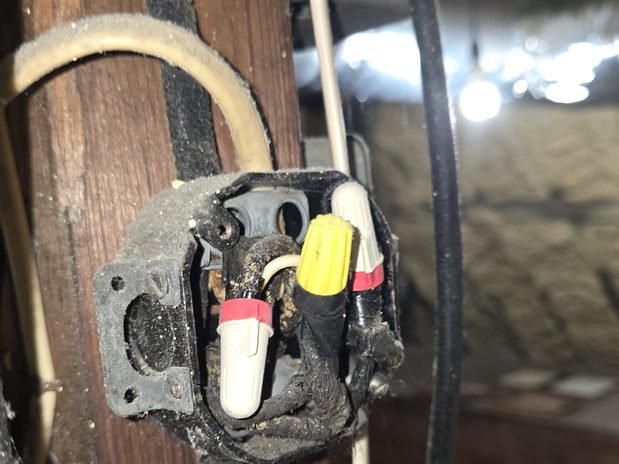
Forest Park, Highland Park, Norwood, Redmont. Edgewood and Hollywood in Homewood. The older streets of Mountain Brook. A great many of the houses people most want to own around Birmingham were built in the first decades of the 1900s, when a home’s electrical system was expected to run a handful of lamps and perhaps an iron. The same wiring is now being asked to carry air conditioning, a kitchen full of appliances and a car charger.
What is usually behind the plaster
- Knob-and-tube. Individual conductors run through the framing on porcelain knobs and tubes. It has no ground, and it was designed to shed heat into open air — which is why attic insulation piled on top of it is a real problem, not a technicality.
- Cloth- and rubber-insulated cable. Common from the 1930s into the 1950s. The insulation dries out and crumbles when it is disturbed, so it often looks fine until somebody changes a light fixture.
- Ungrounded two-prong outlets. Usually the visible sign of one of the two above.
- Fuse boxes and 60-amp services. Sized for a house with no air conditioning. The classic hazard is a fuse larger than the wire it protects, put in to stop it blowing.
Why it comes up when you buy or insure
Some insurers will not write or renew a policy on a house with active knob-and-tube wiring or a fuse panel, and others ask for an electrician’s report first. If you are buying a historic home, find out what is in the walls before closing rather than after. A documented inspection is the cheapest part of the whole purchase.
How a rewire is done without gutting the house
The house is surveyed first: every circuit traced, every outlet and fixture accounted for, and the old wiring located. New cable is then fished through the cavities that already exist — up from the basement or crawlspace, down from the attic, through closets and behind baseboards. Plaster is opened only where there is no other route, in small access holes rather than long channels, and the patching is coordinated with your finish contractor.
The old wiring is disconnected and removed where it can be reached, abandoned safely where it cannot, and documented either way, so the next inspector, insurer or buyer can see what was done. If the service and panel are undersized they are replaced as part of the same job, with the grounding and bonding brought up to current code.
What gets to stay
Original light fixtures can usually be rewired and rehung. Push-button switches are made new to current standards, so the look survives even where the hundred-year-old device cannot. Trim, plaster medallions and switch plates stay where they are.
If a full rewire is not in the budget yet
- Have it inspected, so you know which circuits are original and which are not
- Never insulate over knob-and-tube, and keep heavy loads such as space heaters and window units off those circuits
- AFCI protection can be added to catch the arcing faults old wiring is prone to
- Code allows a GFCI to replace an ungrounded outlet when it is labeled “No Equipment Ground” — it does not create a ground, but it does protect people
One more thing worth knowing: if your home is in a designated historic district, exterior changes such as moving a meter or a service mast to a street-facing wall may need design review. Ask before the work is planned, not after.